Olympic vs Standard Barbells and Plates: What Beginners Should Know
The difference between Olympic (2 in) and standard (1 in) barbells and plates, why they don't mix, how bar weight and capacity compare, and which system makes sense for a small home gym.
Disclosure: Product links on this site aren't affiliate links: we don't earn anything from them today. If that changes, we may earn a commission at no extra cost to you, and this note will say so. Parts of this article were drafted with AI assistance and edited before publishing. Read our disclaimer.
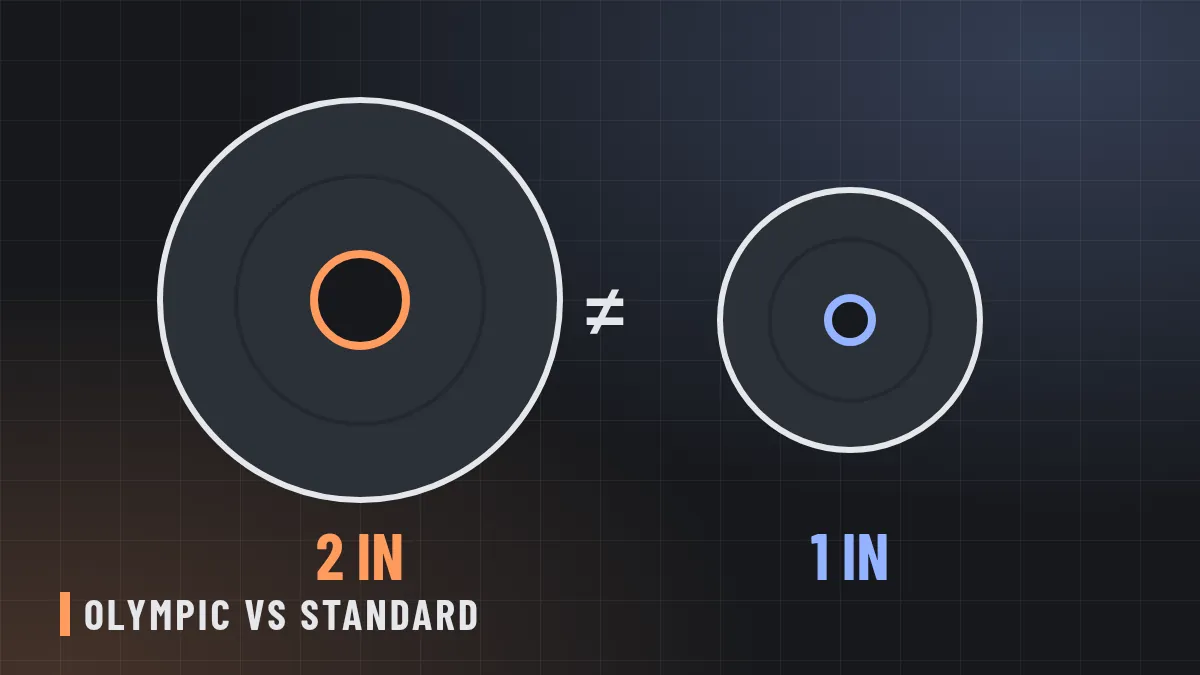
"Olympic" and "standard" describe two different sizes of barbell and plate that don't fit each other. Olympic bars have 2 in (50 mm) sleeves and take plates with 2 in holes; standard bars are about 1 in thick end to end and take plates with roughly 1 in holes. For a home gym you plan to grow, Olympic is usually the better long-term choice.
This guide is research-based, drawing on governing-body equipment standards and typical manufacturer specifications, not hands-on testing. Exact dimensions and ratings vary by model, so check the listing. Prices are rough ranges; check the current price.
The short version
| Feature | Olympic | Standard |
|---|---|---|
| Sleeve (plate) diameter | About 2 in (50 mm) | About 1 in |
| Plate hole | About 2 in | About 1 in (often a little over) |
| Typical full-size bar | 7.2 ft (2.2 m), 20 kg / 45 lb | Often 5 to 6 ft; weights vary widely |
| Rotating sleeves | Yes, on most bars | Usually not |
| Typical weight rating | Usually much higher; check the listing | Usually much lower; check the listing |
| Plate choice | Iron, bumper, many sizes | Mostly iron or vinyl-filled |
| Fits standard racks? | Yes, made for them | Short bars may not span a rack's hooks |
Olympic bars
A men's Olympic bar under competition rules is 20 kg and 2.2 m (about 7.2 ft) long, with a 28 mm grip for weightlifting bars and around 29 mm on many powerlifting-style bars. A women's bar is 15 kg, about 2.01 m long, with a 25 mm grip. In the U.S., the men's bar is usually sold as a "45 lb bar", although 20 kg is about 44.1 lb.
What makes Olympic bars a good home choice:
- Sleeves that spin. The plate-holding ends rotate on bushings or bearings, which takes twisting load off your wrists and elbows on cleans and makes the bar smoother to handle.
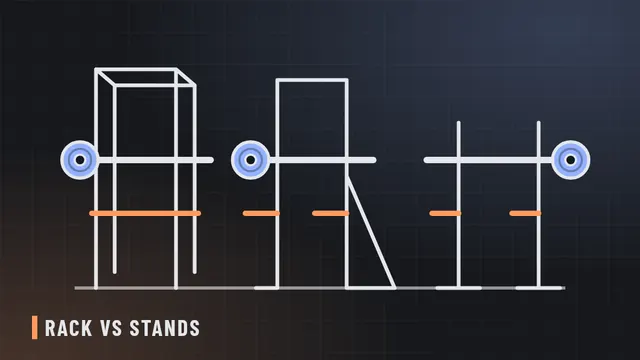
- They fit racks. Racks and squat stands are built around the 7.2 ft bar. A shorter bar may not reach both J-hooks.
- Higher weight ratings on most models, so you won't outgrow the bar.
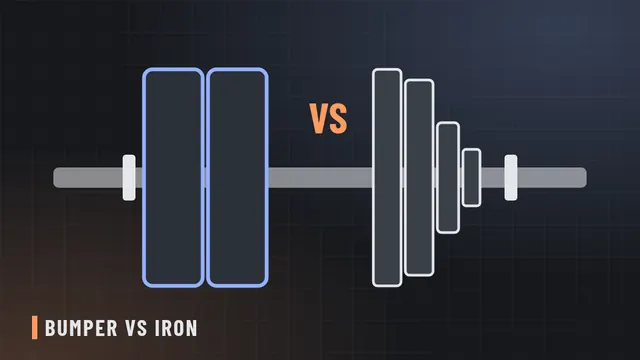
- The widest choice of plates, including the bumper plates covered in bumper vs iron plates.
Good beginner bars usually cost roughly $120–$350 new. Check the listed weight rating, the finish (some resist rust better; see our garage gym guide) and whether the knurling (the textured grip) has a center section, which some people like for squats.
Other Olympic-sleeve bars exist too: shorter "technique" bars, EZ-curl bars and trap bars. They take Olympic plates but often weigh much less than 45 lb, so check the weight before you do the math. Our plate calculator lets you enter a custom bar weight.
Standard bars and plates
Standard bars are the 1 in bars sold in many beginner sets. They're the same thickness from end to end, usually shorter than Olympic bars and don't rotate.
- Pros: cheap; short bars and small plates fit in tight spaces; fine for curls, rows and light presses.
- Cons: lower weight ratings on many models; short bars may not fit a rack's J-hooks; fewer plate options; the bar weight varies a lot, so a "standard bar" can't be assumed to weigh 45 lb.
A standard set can be a cheap way to start if you only want light barbell work. If you think you'll squat, bench or deadlift heavier, buying into the Olympic system from the start usually saves money, because standard plates won't move with you.
Why the plates don't mix
An Olympic plate's 2 in hole slides onto a standard bar but sits loosely and off-center, which is unsafe. A standard plate's 1 in hole won't go on an Olympic sleeve at all. Adapter sleeves exist that slide over a standard bar end to take Olympic plates, but they add length and leverage on a bar that wasn't rated for heavy loads. If you use one, follow the maker's weight limits.
When you buy used plates, check the hole size before you pay. A good rule: if it slides onto your bar's sleeve snugly, it's the right system.
Plate sizes and weights
Olympic plates come in pounds or kilograms:
- Pounds: 45, 35, 25, 10, 5 and 2.5 lb are the usual set.
- Kilograms: 25, 20, 15, 10, 5, 2.5 and 1.25 kg.
Don't mix up a 45 lb plate (about 20.4 kg) with a 20 kg plate (about 44.1 lb): they look alike but put the bar out of balance if you combine them by accident. Our plate math guide covers the formula, and the plate calculator builds each side from just the plates you own.
Which system should you choose?
- Choose Olympic if you're buying a rack or squat stands, think you'll lift heavier than light accessory work, or want bumper plates later.
- Choose standard only if you want a cheap, compact bar for curls, rows and light presses and you're sure you won't move to a rack.
- Not sure yet? Start with dumbbells (see what to buy first). They're compact, and you'll know what you want by the time a barbell makes sense.
Will Olympic plates fit a standard bar?
They'll slide on, but the 2 in hole sits loosely on a 1 in bar, so the plates wobble and sit off-center. That's not safe for lifting. Use plates that match your bar, or a sleeve adapter within the maker's weight limits.
How much does a standard barbell weigh?
It varies. Standard 1 in bars come in many lengths and weights, so check the stamp, the listing or weigh it on a bathroom scale. Only full-size Olympic bars are made to a common weight: 20 kg (sold in the U.S. as 45 lb) for the men's bar and 15 kg for the women's.
Is an Olympic barbell worth it for a beginner?
If you'll train the main barbell lifts in a rack, yes. It fits racks, it's rated for heavy loads and it works with the most plate types. If you only want light curls and rows, a standard bar can be enough.