How to Load a Barbell: Plate Math for Beginners (lb and kg)
How to work out which plates go on each side of a barbell in pounds or kilograms, the standard bar and plate weights, plate colors, and safe loading habits for a home gym.
Disclosure: Product links on this site aren't affiliate links: we don't earn anything from them today. If that changes, we may earn a commission at no extra cost to you, and this note will say so. Parts of this article were drafted with AI assistance and edited before publishing. Read our disclaimer.
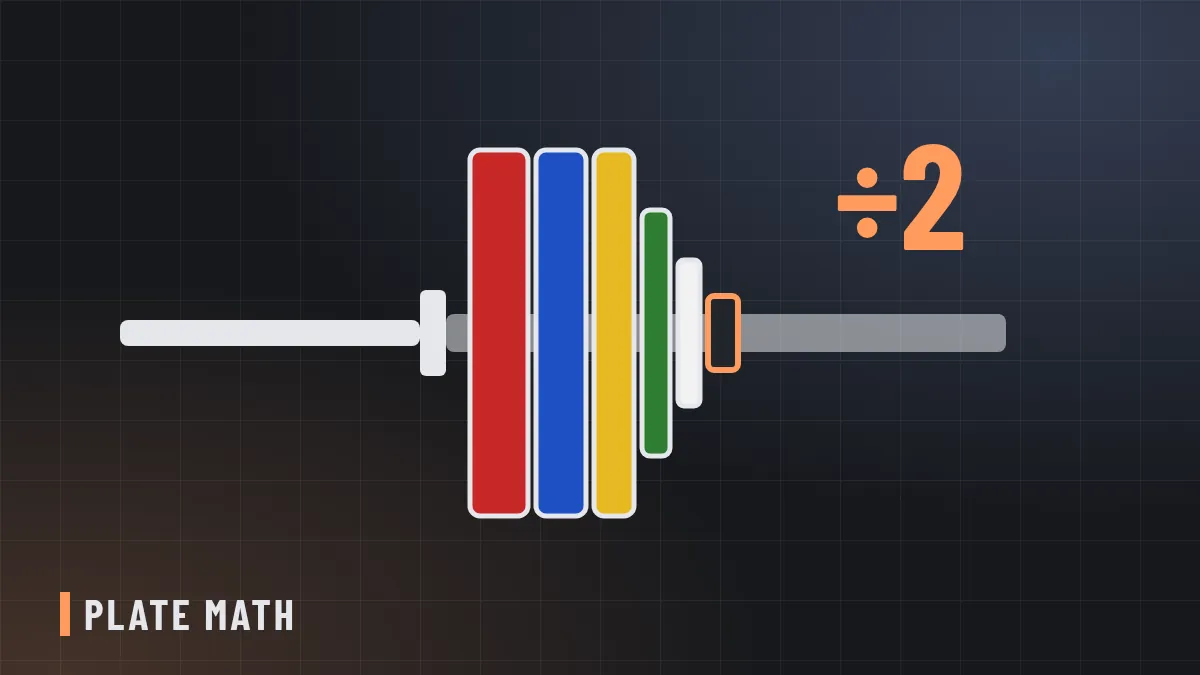
Plate math is one subtraction and one division: take your target weight, subtract the bar, and split what's left in half. That's what goes on each side. On a 45 lb bar, 135 lb is one 45 lb plate per side; 225 lb is two.
Want it done for you? Our free Plate Calculator works in pounds and kilograms and only uses the plates you own.
The formula
Weight per side = (target − bar − collars) ÷ 2
Example: you want 155 lb on a 45 lb bar with spring clips (count them as zero).
- 155 − 45 = 110 lb of plates in total.
- 110 ÷ 2 = 55 lb per side.
- Build 55 from your plates, heaviest first: 45 + 10 on each side.
Same idea in kilograms: 100 kg on a 20 kg bar → 80 kg of plates → 40 kg per side → 25 + 15 each side.
Know your bar
| Bar | Weight | Length |
|---|---|---|
| Men's Olympic bar | 20 kg (about 44.1 lb); usually sold in the U.S. as 45 lb | 2.2 m (about 7.2 ft) |
| Women's Olympic bar | 15 kg (about 33 lb); often listed as 35 lb in the U.S. | About 2.01 m (6.6 ft) |
| "Standard" 1-inch bars, EZ-curl bars, trap bars | Varies a lot | Varies |
If you're not sure what your bar weighs, look for a stamp on the bar or the product listing, or weigh it on a bathroom scale (weigh yourself holding it, then subtract your own weight). Olympic bars have 2 in (50 mm) sleeves, so they need plates with 2 in holes; standard 1-inch bars take plates with 1 in holes.
Common plate sizes
- Pounds: 45, 35, 25, 10, 5 and 2.5 lb are the usual set. Some gyms have 55 lb plates or small 1.25 lb "fractional" plates.
- Kilograms: 25, 20, 15, 10, 5, 2.5 and 1.25 kg, sometimes 0.5 kg.
- Colors: competition kg plates follow a color code: red 25 kg, blue 20 kg, yellow 15 kg, green 10 kg, and white 5 kg. Plenty of home plates are just black, so read the number, not the color.
Don't mix up 45 lb and 20 kg plates. They look alike, but a 45 lb plate is about 20.4 kg and a 20 kg plate is about 44.1 lb. Mixing them by accident throws your total off and makes the sides uneven.
Handy loads to memorize
On a 45 lb bar:
| Total | Each side |
|---|---|
| 95 lb | 25 |
| 135 lb | 45 |
| 185 lb | 45 + 25 |
| 225 lb | 45 + 45 |
| 315 lb | 45 + 45 + 45 |
On a 20 kg bar:
| Total | Each side |
|---|---|
| 60 kg | 20 |
| 80 kg | 25 + 5 |
| 100 kg | 25 + 15 |
| 120 kg | 25 + 25 |
When the number doesn't work out
With a 2.5 lb smallest plate, a 45 lb bar can only make totals in 5 lb steps (2.5 lb per side). So 137 lb isn't possible: your choices are 135 or 140. In kilograms with 1.25 kg plates, the steps are 2.5 kg. The Plate Calculator shows the nearest loads above and below when a number can't be made, and you can tell it how many pairs of each plate you own.
Loading safely at home
- Heaviest plates first, innermost. Big plates go on first, smaller ones outside.
- Alternate sides. When the bar is in J-hooks, adding all the plates to one side can tip it off the hooks. Add a plate to one side, then the other, and unload the same way.
- Use collars. Plates can creep along the sleeve during a set. Spring clips are fine for most home training.
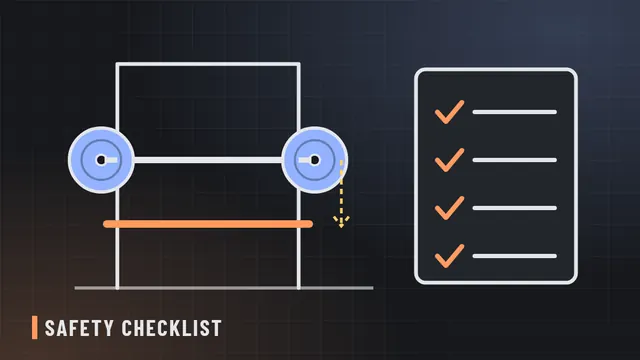
- Set your safeties. When you squat or bench alone, set safety pins, spotter arms or straps just below the lowest point of the lift.
- Bend your knees, not your back, when you pick up plates, and store them on a rack or tree instead of leaning them against a wall where they can fall.
How do you calculate plates on a barbell?
Subtract the bar weight (and any collars) from your target weight, then divide by two. The result is the weight to load on each side, built from the heaviest plates first.
Is an Olympic bar 45 lb or 20 kg?
The men's Olympic bar is 20 kg by competition standard, which is about 44.1 lb. Bars sold in the U.S. are usually marketed as 45 lb. A women's Olympic bar is 15 kg, about 33 lb.
Do I count the collars?
Spring clips weigh so little that most people ignore them. Competition collars weigh 2.5 kg each, so count them if you use them.
If you're new to barbell training or have a health condition, check with a doctor or a qualified coach before lifting heavy. See our disclaimer.